

Choosing a home bookshelf is not only about appearance. A good bookshelf should match the room’s available space, support the real weight of books, stay stable on the floor, and remain practical for daily access and cleaning. If you are selecting shelves for a family home, apartment, home office, or study corner, the most reliable approach is to decide requirements in order: location and size, load and stability, layout and storage behavior, then material and finish.
If you are sourcing ready-to-ship or customizable options, you can review Levia’s range here: book shelves.
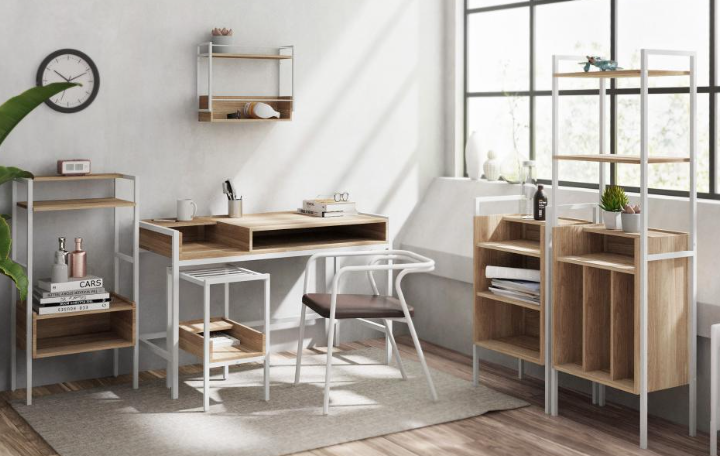
Start with the room, not the product photo
Before you choose a bookshelf style, confirm where it will be used and what it must store. A living room shelf often balances books with décor and may prioritize a cleaner visual profile. A home office shelf is usually driven by capacity, quick retrieval, and document organization. A child’s room shelf should prioritize safety, rounded edges, and easy reach.
Measure the exact wall width and available depth without blocking doors, drawers, curtains, or walkway clearance. For a typical residential path, leaving clear passage matters more than adding a few extra centimeters of shelf depth. If the shelf sits near a desk or sofa, align shelf width with the furniture below so the room looks intentional and the footprint stays efficient.
Choose the right size by linking it to book formats
Bookshelf sizing works best when it is based on what you actually own. Standard novels and paperbacks can fit into shallower shelves, but art books, binders, and oversized albums often need deeper shelves and higher spacing. If you expect your collection to grow, plan extra capacity rather than forcing shelves to run full at day one, because overloaded shelves create long-term stability issues and daily inconvenience.
Practical sizing decisions:
- Shelf depth should fully support the book base with minimal overhang, especially for large-format books.
- Shelf height between layers should match the tallest items you store most often, not the tallest item you own once.
- Overall shelf height should be chosen based on who uses it daily and whether the top shelf will be accessed frequently.
Load capacity is the core performance requirement
Books are heavy, and the total load becomes significant quickly. A bookshelf that looks fine when empty can flex or become unstable when filled. For home use, focus on structure, tier support, and the relationship between shelf span and thickness. Long spans without reinforcement are more likely to deflect under weight, especially if heavy items are stored on one side.
When evaluating a shelf, consider:
- How weight is transferred from shelves into the frame
- Whether each tier has consistent support points
- Whether the frame has cross bracing or structural features that reduce sway
- Whether the design encourages distributing heavier books on lower tiers
For multi-tier shelves, a stable base and a rigid frame reduce movement when people pull books in and out. This is important in homes with children, pets, or frequent cleaning routines.
Decide the layout based on how you will organize items
The shelf layout should match your organizing method. If you store books by category or author, you may want consistent bay widths and uniform spacing. If you store a mix of books, storage boxes, and display items, you may want a design with varied compartment sizes.
Common home layouts and what they support:
- Uniform grid layout supports book-only storage and clean visual order.
- Mixed compartments support books plus baskets, décor, and flexible household storage.
- Open-back designs improve visual lightness and make rooms feel less crowded.
- Narrow vertical designs work well for small corners and apartments where floor area is limited.
If you are buying for a household with different users, prioritize layouts that allow adjustments, because needs change between work, school, and lifestyle seasons.
Match style to the room, but keep maintenance realistic
A bookshelf is a large surface that is cleaned regularly. Dark finishes can show dust faster. Glossy surfaces can show fingerprints more easily. Very textured surfaces can trap dust along edges. Choose a finish that fits the home’s cleaning habits and lighting conditions. A practical finish reduces visible wear and keeps the shelf looking consistent over time.
Style decisions that remain practical:
- Select finishes that do not highlight minor scuffs in high-traffic rooms.
- Keep shelf edges comfortable if people frequently reach in tight spaces.
- Choose designs with enough clearance to vacuum or mop around the base.
Use safety and stability checks before finalizing
Home safety is a selection requirement, especially for tall shelves and homes with children. Even when shelves are stable, uneven floors and repeated pulling can increase tipping risk over time. Choose a bookshelf that supports stable placement and can be secured if needed.
Safety-focused selection points:
- Prefer designs with a wider base or strong vertical frame rigidity for tall units.
- Place heavier items on lower tiers to reduce the center of gravity.
- If the shelf is tall, consider wall anchoring based on wall type and local safety expectations.
Pick the right bookshelf type for each room scenario
Different rooms create different constraints. Selecting by scenario prevents mistakes like choosing a deep shelf for a narrow hallway or a tall shelf for a low ceiling corner.
- Living room: prioritize balanced proportions, mixed storage capability, and visual integration with seating and TV areas.
- Home office: prioritize capacity, consistent compartment sizing, and quick access to files and reference books.
- Bedroom: prioritize moderate height and a calm visual profile, avoiding designs that feel heavy in smaller rooms.
- Kids room: prioritize lower height, easy reach, stability, and an organizing layout that supports learning habits.
Customization options that matter for home buyers and project buyers
If you are sourcing shelves for different markets, customization helps you align product structure and aesthetics with your target customer. Common customization directions include shelf dimensions, tier count, compartment layout, finish color, and packaging standards.
Key customization points:
- Size variants to fit apartments and larger homes
- Tier and compartment configuration to support books plus storage baskets
- Finish options to match modern, industrial, or minimalist interiors
- Packaging protection for e-commerce shipping and retail distribution
You can review Levia’s available designs and request adjustments starting from the book shelves collection.
Quick selection table for home bookshelf decisions
| Decision Area | What to Check | What It Prevents |
|---|---|---|
| Room fit | width, depth, height, clearance | blocked walkways, awkward layout |
| Storage need | book formats, growth margin, mixed items | overflow storage, frequent rearranging |
| Load behavior | frame support, shelf span, rigidity | bending shelves, instability |
| Layout | uniform vs mixed compartments | poor organization, wasted space |
| Finish | scratch visibility, dust behavior, cleaning | fast wear appearance, high maintenance |
| Safety | base stability, tall unit anchoring | tipping risk, movement during use |
Conclusion
A home bookshelf should be chosen by space fit, load performance, and practical daily use before you focus on style. Measure the area carefully, select a structure that stays rigid under real book weight, and choose a layout that matches how you organize books and household items. Then confirm finish and safety details so the shelf remains easy to maintain and stable over time. If you want a faster selection path, start from Levia’s book shelves range and narrow by size, tier layout, and load-focused structure.